
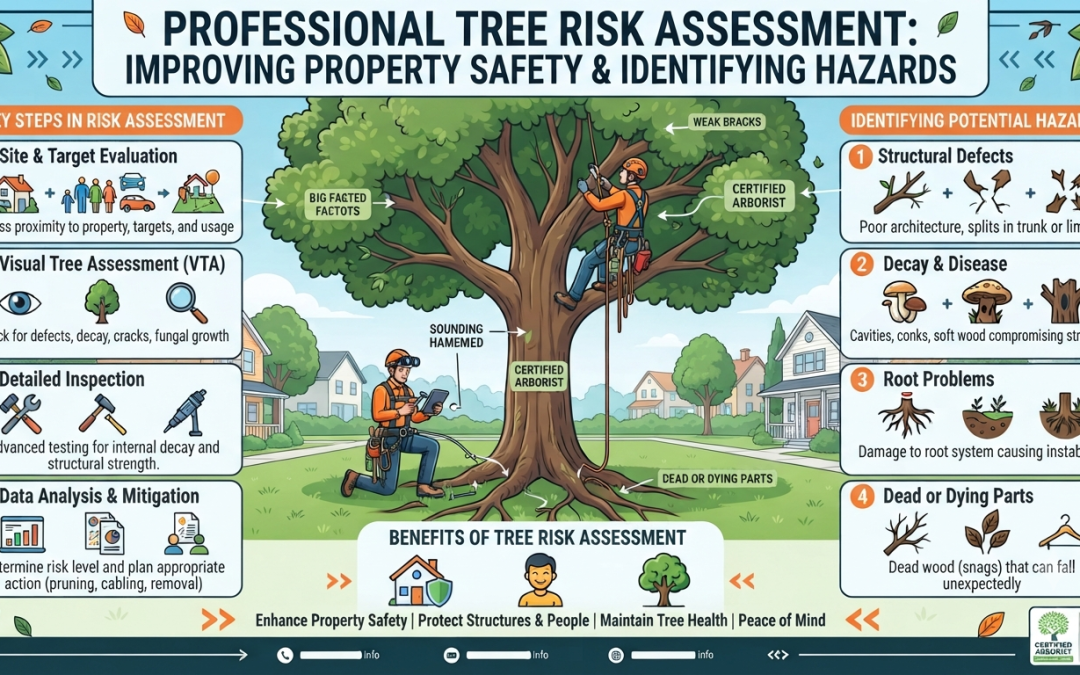
Trees add beauty, shade, and environmental value to residential, commercial, and industrial properties. Healthy trees improve landscapes, reduce heat, and create a more pleasant environment for employees, customers, and homeowners alike. However, when trees become damaged, diseased, or structurally unstable, they can pose serious risks to people and property.
Many tree-related accidents occur because hidden problems go unnoticed until it is too late. Weak branches, internal decay, root damage, or unstable trunks may not always show obvious warning signs. This is why professional tree risk assessments play an important role in protecting properties and ensuring public safety.
A professional tree risk assessment helps identify potential hazards before they become dangerous, allowing property owners to take preventive action through proper tree maintenance, pruning, or removal when necessary.
What Is a Tree Risk Assessment?
A tree risk assessment is a professional evaluation of a tree’s overall health, structural condition, and potential safety risks.
During the assessment, trained tree specialists examine various factors, including:
- Tree health
- Branch condition
- Trunk stability
- Root system
- Signs of disease
- Pest damage
- Leaning or structural defects
- Surrounding environment
The goal is to determine whether a tree presents any level of risk to nearby people, buildings, vehicles, or utilities.
Why Tree Risk Assessments Are Important
Not every tree with visible damage is dangerous, and not every hazardous tree shows obvious signs.
Some internal defects remain hidden until professional equipment and experience are used to identify them.
Regular tree risk assessments help property owners:
- Detect hidden structural problems
- Prevent falling branches
- Reduce accident risks
- Protect nearby buildings
- Improve landscape safety
- Plan future maintenance
Early detection often prevents costly emergency situations.
Identifying Hidden Tree Hazards
Professional inspections can identify problems that are difficult to detect without proper training.
Common hidden hazards include:
- Internal trunk decay
- Hollow tree sections
- Weak branch attachments
- Root deterioration
- Soil instability
- Pest infestations
- Fungal infections
- Storm-related structural damage
These issues may significantly weaken a tree even if it appears healthy from the outside.
Protecting People and Property
Large trees growing near homes, offices, schools, factories, or public spaces require regular monitoring.
Without proper inspections, unstable trees may cause:
- Falling branches
- Roof damage
- Vehicle damage
- Injuries to pedestrians
- Power line disruptions
- Property destruction
Professional assessments help reduce these risks by recommending appropriate maintenance before accidents occur.
Supporting Healthy Tree Growth
Tree risk assessments are not only about identifying dangerous trees.
They also help improve overall tree health.
Specialists may recommend:
- Corrective pruning
- Crown reduction
- Deadwood removal
- Soil improvement
- Pest treatment
- Nutrient management
Healthy trees are generally stronger, safer, and more resistant to disease.
The Importance of Regular Tree Maintenance
Routine maintenance works together with risk assessments to improve long-term safety.
Services may include:
- Tree pruning
- Tree trimming
- Crown thinning
- Dead branch removal
- Tree fertilization
- Pest management
Regular maintenance reduces unnecessary stress on trees and helps extend their lifespan.
Why Storm Damage Increases Tree Risks
Heavy rain, strong winds, and thunderstorms can weaken trees even when damage is not immediately visible.
Storms may cause:
- Cracked branches
- Split trunks
- Root movement
- Broken limbs
- Leaning trees
A professional inspection after severe weather helps identify hidden damage before another storm causes complete failure.
Commercial Properties Benefit from Tree Assessments
Businesses often have trees located near:
- Office buildings
- Car parks
- Factories
- Shopping centres
- Hotels
- Schools
Regular assessments help property managers reduce liability risks while maintaining a safe environment for employees and visitors.
Preventive inspections also minimize unexpected disruptions caused by emergency tree failures.
When Should a Tree Risk Assessment Be Performed?
Property owners should consider scheduling an assessment when:
- Trees appear unhealthy
- Large branches begin dying
- Trees lean suddenly
- Cracks develop in the trunk
- Construction occurs nearby
- Severe storms have passed
- Trees grow close to buildings
Regular inspections are especially important for mature trees located in high-traffic areas.
Why Professional Assessments Are Better Than DIY Inspections
While homeowners can identify obvious problems, many structural defects require professional knowledge and experience.
Tree specialists understand:
- Tree biology
- Structural stability
- Disease symptoms
- Root health
- Risk evaluation techniques
They also use specialized tools and follow industry best practices to provide accurate recommendations.
Professional assessments reduce guesswork and help property owners make informed decisions.
Long-Term Benefits of Tree Risk Assessments
Investing in regular tree assessments provides numerous long-term advantages.
Benefits include:
✔ Improved property safety
✔ Early hazard detection
✔ Lower maintenance costs
✔ Reduced emergency tree removal
✔ Healthier trees
✔ Longer tree lifespan
✔ Better landscape appearance
✔ Greater peace of mind
Preventive care is often more cost-effective than responding to emergency situations after damage has occurred.
Choosing a Professional Tree Care Company
When selecting a tree care provider, consider companies that offer:
- Experienced tree specialists
- Comprehensive tree inspections
- Professional pruning services
- Safe tree removal
- Emergency tree services
- Proper equipment
- Safety-focused work practices
Working with experienced professionals helps ensure trees are managed safely and responsibly.
Conclusion
Professional tree risk assessments are an essential part of responsible property maintenance. They help identify hidden hazards, improve tree health, and reduce the risk of accidents before they occur.
Whether for residential homes, commercial buildings, factories, or public spaces, regular assessments provide valuable information that supports safer landscapes and healthier trees. Combined with professional pruning, maintenance, and tree removal services when necessary, tree risk assessments help protect both people and property while preserving the long-term value of your landscape.
FAQs
1. What is a tree risk assessment?
A tree risk assessment is a professional inspection that evaluates a tree’s health, structural stability, and potential safety risks. During the assessment, specialists check the trunk, branches, roots, and surrounding environment to identify hazards and recommend appropriate maintenance or tree removal if necessary.
2. How often should trees be inspected?
The inspection frequency depends on the tree’s age, location, and condition. Mature trees, trees near buildings, roads, or power lines, and trees that have experienced severe weather should be inspected regularly to identify potential hazards before they become serious safety concerns.
3. Can a healthy-looking tree still be dangerous?
Yes. Some trees may appear healthy on the outside while hiding internal decay, root damage, pest infestations, or structural weaknesses. A professional tree risk assessment can detect these hidden issues and recommend the best course of action to prevent accidents or property damage.
4. When should I arrange a professional tree risk assessment?
You should consider scheduling an assessment if your tree is leaning, has dead or broken branches, shows signs of disease, has suffered storm damage, or is located close to buildings, vehicles, or public walkways. Regular inspections are also recommended as part of a preventive tree maintenance plan.
5. What happens after a tree risk assessment?
After completing the inspection, the tree specialist will explain the condition of your trees and recommend suitable solutions. Depending on the findings, this may include pruning, crown reduction, pest treatment, ongoing maintenance, or safe tree removal to improve property safety and preserve healthy trees whenever possible.