
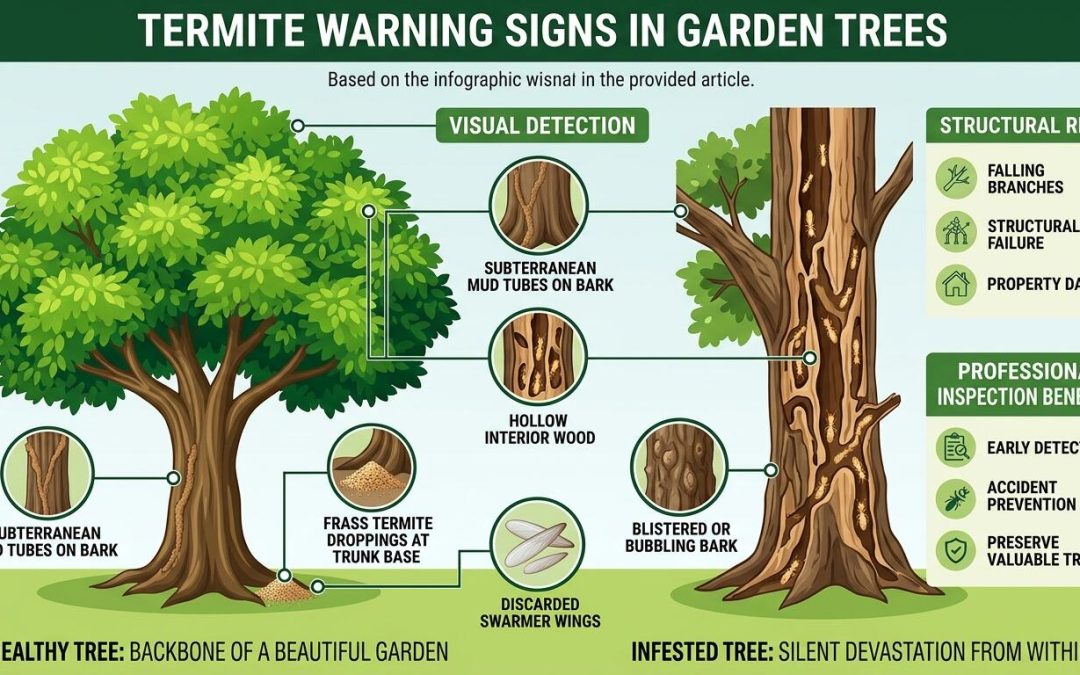
Trees are the backbone of any beautiful garden. They provide shade, improve air quality, and create a welcoming environment for homeowners and wildlife alike. A well-maintained garden with healthy trees can significantly increase property value and create a peaceful retreat for you and your family. However, when termites invade your trees, the damage can be devastating—often progressing silently until the tree becomes a serious hazard.
Many gardeners overlook the early signs of termite infestation because the damage occurs from the inside out. Termites are masters of concealment, building their colonies deep within the wood where they remain protected from predators and the elements. By the time symptoms become obvious on the outside, the tree may already be structurally compromised and at risk of falling.
This is why understanding how to identify termite-infested trees is essential for protecting your property and maintaining a safe garden environment. Whether you have a single ornamental tree or a garden full of mature specimens, regular monitoring and professional inspections can mean the difference between saving your trees and facing costly removal.
A professional tree risk assessment can help detect termite damage before it becomes dangerous, allowing property owners to take preventive action through proper tree maintenance, treatment, or removal when necessary.
What Is Termite Infestation in Trees?
Termite infestation occurs when subterranean or drywood termites colonize a tree, feeding on the cellulose found in wood. These insects live in colonies that can number in the thousands, and their constant feeding activity gradually hollows out the tree from within. Over time, this feeding activity weakens the tree’s internal structure, making it vulnerable to disease, storm damage, and collapse.
Subterranean termites typically build mud tubes to travel from their underground colonies to the trees they infest. These tubes protect them from air exposure and allow them to maintain the humid environment they need to survive. Drywood termites, on the other hand, can establish colonies directly inside the wood without any contact with soil, making them particularly difficult to detect until significant damage has occurred.
During a professional inspection, tree specialists examine various factors, including:
-
Tree health and vigor
-
Branch condition
-
Trunk stability
-
Root system integrity
-
Signs of termite activity
-
Mud tubes or galleries
-
Hollow sounds when tapped
-
Surrounding soil conditions
-
Presence of swarmers or discarded wings
-
Frass deposits near the base
The goal is to determine whether termites have compromised the tree and whether it presents any level of risk to nearby people, buildings, or vehicles.
Why Termite Infestations Are Dangerous
Not every tree with termites will collapse immediately, and not every infested tree shows obvious external signs. However, the potential for catastrophic failure increases with every passing day that the infestation goes untreated.
Some termite damage remains hidden until professional equipment and experience are used to identify it. By the time a tree shows visible signs of decline, the internal damage may already be extensive.
Regular tree inspections help property owners:
-
Detect hidden structural damage
-
Prevent falling branches
-
Reduce accident risks
-
Protect nearby buildings
-
Improve garden safety
-
Plan future maintenance
-
Save valuable trees through early intervention
-
Avoid costly emergency tree removal
Early detection often prevents costly emergency situations and saves valuable trees that might otherwise need to be removed. The cost of a professional inspection is minimal compared to the potential expense of repairing property damage or removing a fallen tree.
Identifying Hidden Termite Damage
Professional inspections can identify problems that are difficult to detect without proper training. Termites are expert hiders, and their damage often goes unnoticed until it reaches advanced stages.
Common hidden signs of termite infestation include:
-
Mud tubes on the trunk or branches
-
Hollow or papery wood when tapped
-
Blistered or bubbling bark
-
Frass (termite droppings) near the base
-
Swarmers or discarded wings
-
Tunnels or galleries inside wood
-
Soft or crumbling wood
-
Unexplained tree lean or instability
-
Sagging or drooping branches
-
Sawdust-like material around the tree base
-
Tight, hard-to-open bark
-
Damp or discolored patches on the trunk
These issues may significantly weaken a tree even if it appears healthy from the outside. A tree that looks perfectly normal could be dangerously hollow inside, ready to fall with the next strong wind.
Protecting People and Property
Large trees growing near homes, offices, schools, or public spaces require regular monitoring. The risk of a termite-infested tree falling increases with every storm, and the consequences can be severe.
Without proper inspections, termite-infested trees may cause:
-
Falling branches
-
Roof damage
-
Vehicle damage
-
Injuries to pedestrians
-
Power line disruptions
-
Property destruction
-
Fence damage
-
Landscape destruction
Professional assessments help reduce these risks by recommending appropriate treatment or removal before accidents occur. Property owners who schedule regular inspections demonstrate responsible care and can significantly reduce their liability exposure.
Supporting Healthy Tree Growth
Tree inspections are not only about identifying dangerous trees. They also help improve overall tree health and can reveal underlying issues that make trees more susceptible to termite attack in the first place.
Specialists may recommend:
-
Termite treatment options
-
Corrective pruning
-
Crown reduction
-
Deadwood removal
-
Soil improvement
-
Pest management
-
Proper watering techniques
-
Mulching best practices
-
Tree fertilization programs
Healthy trees are generally stronger, safer, and more resistant to disease and pest infestations. When trees are stressed by drought, poor soil, or improper pruning, they become prime targets for termites and other pests.
The Importance of Regular Tree Maintenance
Routine maintenance works together with risk assessments to improve long-term safety. A well-maintained tree is less likely to attract termites and more likely to survive an infestation if one occurs.
Services may include:
-
Tree pruning
-
Tree trimming
-
Crown thinning
-
Dead branch removal
-
Tree fertilization
-
Pest and termite management
-
Root care and soil treatment
-
Mulching and moisture management
Regular maintenance reduces unnecessary stress on trees and helps extend their lifespan. It also gives arborists the opportunity to spot early warning signs of termite activity during routine visits.
Why Storm Damage Increases Termite Risks
Heavy rain, strong winds, and thunderstorms can weaken trees even when damage is not immediately visible. The stress of storm damage creates ideal conditions for termite infestation.
Storms may cause:
-
Cracked branches
-
Split trunks
-
Root movement
-
Broken limbs
-
Leaning trees
-
Bark damage
-
Soil erosion around roots
Termites are attracted to moisture and damaged wood, so a professional inspection after severe weather helps identify hidden damage before another storm causes complete failure. If your garden has recently experienced severe weather, scheduling an inspection should be a priority.
Commercial Properties Benefit from Tree Assessments
Businesses often have trees located near:
-
Office buildings
-
Car parks
-
Factories
-
Shopping centres
-
Hotels
-
Schools
-
Hospitals
-
Public parks
Regular assessments help property managers reduce liability risks while maintaining a safe environment for employees and visitors. A single falling tree can cause significant damage, disrupt operations, and result in costly legal claims.
Preventive inspections also minimize unexpected disruptions caused by emergency tree failures. For commercial properties, scheduled maintenance is far more cost-effective than emergency response.
When Should a Tree Risk Assessment Be Performed?
Property owners should consider scheduling an assessment when:
-
Trees appear unhealthy
-
Large branches begin dying
-
Trees lean suddenly
-
Cracks develop in the trunk
-
Mud tubes are visible on trees
-
Wood sounds hollow when tapped
-
Frass or sawdust appears at the base
-
Swarmers are spotted nearby
-
Construction occurs nearby
-
Severe storms have passed
-
Trees grow close to buildings
-
You notice unexplained wilting or yellowing
Regular inspections are especially important for mature trees located in high-traffic areas. Older trees are more susceptible to termite attack and more likely to cause significant damage if they fall.
Why Professional Assessments Are Better Than DIY Inspections
While homeowners can identify obvious problems, many structural defects and termite infestations require professional knowledge and experience. Termites are experts at hiding, and their damage is often invisible from the outside.
Tree specialists understand:
-
Tree biology
-
Structural stability
-
Disease and pest symptoms
-
Root health
-
Risk evaluation techniques
-
Termite behavior and life cycles
-
Treatment options and safety protocols
They also use specialized tools and follow industry best practices to provide accurate recommendations. Professional assessments reduce guesswork and help property owners make informed decisions about treatment, maintenance, or removal.
Choosing a Professional Tree Care Company
When selecting a tree care provider, consider companies that offer:
-
Experienced tree specialists
-
Comprehensive tree inspections
-
Professional pruning services
-
Safe tree removal
-
Emergency tree services
-
Proper equipment
-
Safety-focused work practices
-
Termite treatment expertise
-
Certified arborists on staff
Working with experienced professionals helps ensure trees are managed safely and responsibly. Always ask for credentials, insurance information, and references before hiring a tree care company.
Conclusion
Professional tree risk assessments are an essential part of responsible garden maintenance. They help identify hidden termite damage, improve tree health, and reduce the risk of accidents before they occur.
Whether for residential homes, commercial buildings, factories, or public spaces, regular assessments provide valuable information that supports safer landscapes and healthier trees. Combined with professional pruning, maintenance, and tree removal services when necessary, tree risk assessments help protect both people and property while preserving the long-term value of your landscape.
Don’t wait until a termite-infested tree becomes a danger. Schedule a professional inspection today and take the first step toward a safer, healthier garden.
FAQs
1. How do I know if my tree has termites?
Signs of termite infestation include mud tubes on the trunk, hollow-sounding wood, blistered bark, frass (termite droppings), discarded wings, and soft or crumbling wood. A professional inspection can confirm whether termites are present and assess the extent of the damage.
2. Can a termite-infested tree be saved?
It depends on the severity of the infestation. If caught early, termite treatment and proper tree care may save the tree. However, if the structural integrity is compromised, removal may be necessary to prevent safety hazards.
3. How often should trees be inspected for termites?
The inspection frequency depends on the tree’s age, location, and condition. Mature trees, trees near buildings, and trees that have experienced severe weather should be inspected regularly to identify potential hazards before they become serious safety concerns.
4. Can a healthy-looking tree still have termites?
Yes. Termites often attack from the inside out, so a tree may appear healthy on the outside while hiding internal damage. A professional tree risk assessment can detect these hidden issues and recommend the best course of action.
5. What happens after a tree risk assessment?
After completing the inspection, the tree specialist will explain the condition of your trees and recommend suitable solutions. Depending on the findings, this may include termite treatment, pruning, crown reduction, ongoing maintenance, or safe tree removal to improve property safety and preserve healthy trees whenever possible.