
Pruning is one of the most beneficial practices for maintaining healthy, safe trees. It removes deadwood, improves structure, and reduces the risk of falling branches. However, in regions with high humidity, every pruning cut creates an open wound—and moisture-loving fungi are always waiting for an opportunity.
Warm, damp air accelerates wood decay, and a poorly treated or improperly timed pruning cut can become an entry point for rot that slowly hollows out a tree from the inside. Understanding how to manage pruning wounds in humid conditions is essential for protecting the long-term health and structural integrity of your trees.
This guide explains how pruning wounds heal, why humidity increases rot risk, and the practical steps property owners and tree care professionals can take to prevent decay.
Why High Humidity Accelerates Tree Rot
Wood decay is driven by fungi, and fungi thrive in moist environments. In high-humidity climates, the conditions that favor decay are present for much of the year:
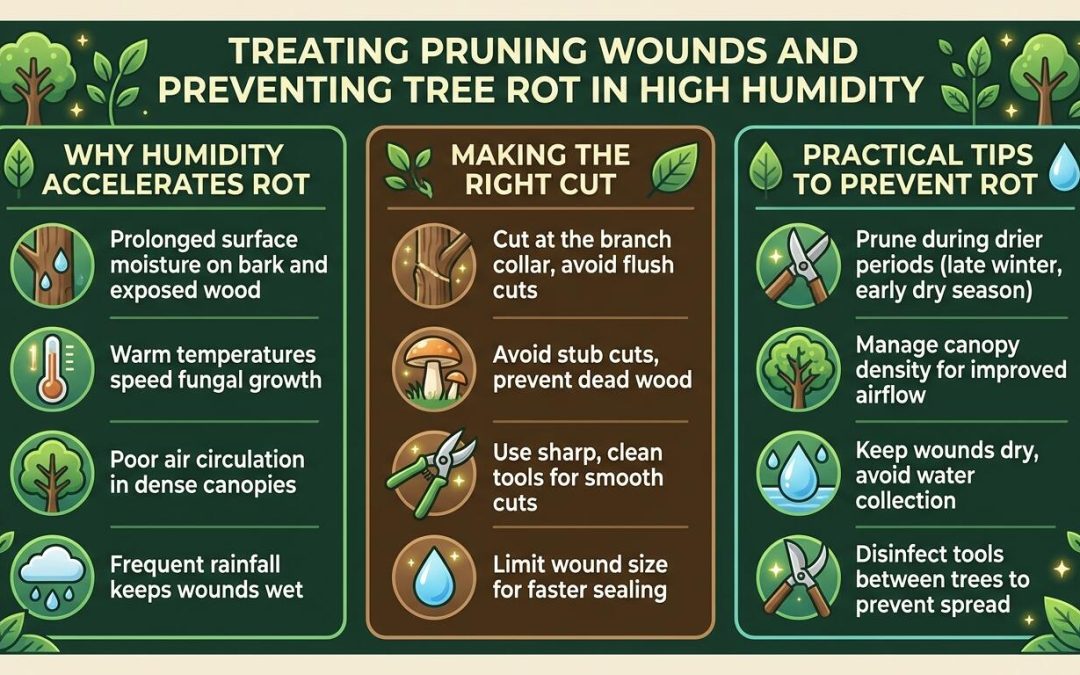
- Prolonged surface moisture on bark and exposed wood
- Warm temperatures that speed fungal growth
- Poor air circulation in dense canopies
- Frequent rainfall keeping wounds wet
- Soil that stays saturated, reducing root oxygen
When a pruning wound remains wet for extended periods, decay fungi can colonize the exposed wood before the tree’s natural defenses seal the cut. This is why wound treatment and careful pruning timing matter far more in humid regions than in dry climates.
How Trees Actually Heal Pruning Wounds
A common misconception is that trees “heal” wounds the way human skin does. In reality, trees do not regenerate damaged wood. Instead, they compartmentalize it—forming a protective barrier of specialized tissue that seals off the wounded area from the rest of the tree.
This process, often called CODIT (Compartmentalization of Decay in Trees), depends on:
- A clean, properly positioned pruning cut
- Healthy sapwood and cambium around the wound
- Low exposure to moisture and pathogens
- Adequate tree vigor and nutrition
In humid conditions, the tree’s natural barrier forms more slowly, giving decay organisms a longer window to establish. Supporting this process is the core of effective wound care.
Making the Right Cut: The Foundation of Rot Prevention
No wound treatment can compensate for a poor pruning cut. The single most important step in preventing rot is cutting correctly in the first place.
Key principles include:
- Cut at the branch collar. The swollen area where a branch meets the trunk contains natural defense chemicals. Cutting flush against the trunk removes this protection and creates a larger wound.
- Avoid stub cuts. Leaving a stub prevents proper sealing and creates dead wood that invites decay.
- Use sharp, clean tools. Ragged cuts from dull blades create more surface area for moisture and fungi.
- Make the three-cut method standard. For larger branches, the undercut, top cut, and final cut technique prevents bark tearing.
- Limit wound size. Smaller cuts seal faster. Avoid unnecessary large-diameter cuts, especially in humid seasons.
Should You Apply Wound Sealant or Paint?
Wound dressings and sealants are among the most debated topics in tree care—and in humid climates, the evidence is particularly clear.
Research consistently shows that most wound sealants:
- Trap moisture against the wound surface
- Create a humid micro-environment that favors fungal growth
- Interfere with the tree’s natural compartmentalization process
- Provide no reliable protection against decay organisms
In most cases, the best treatment for a fresh pruning wound is no treatment at all—provided the cut was made correctly. The tree’s own defenses are more effective than any coating. Sealants are generally not recommended, and in high-humidity conditions they can do more harm than good.
Practical Steps to Prevent Rot After Pruning
While sealants are rarely useful, several practices genuinely reduce rot risk in humid environments:
1. Prune at the Right Time
In humid climates, pruning timing matters. Late winter or early dry-season pruning often allows wounds to begin sealing before fungal activity peaks. Avoid pruning just before or during prolonged wet periods when possible, and avoid pruning during active spore-release seasons for known local pathogens.
2. Manage Canopy Density
Dense foliage traps moisture and blocks airflow. Thinning the canopy through selective crown thinning improves air circulation, helping wounds and bark dry faster.
3. Keep Wounds Dry
Where feasible, orient cuts to shed water and avoid creating pockets that collect rain. Ensure surrounding vegetation does not press against or shade fresh wounds.
4. Maintain Soil and Root Health
Well-drained soil and healthy roots support vigorous compartmentalization. Avoid overwatering, improve drainage where needed, and prevent soil compaction around the root zone.
5. Remove Deadwood Promptly
Dead branches hold moisture and serve as fungal reservoirs. In humid climates, prompt deadwood removal reduces the spore load that can reach fresh wounds.
6. Disinfect Tools Between Trees
Clean pruning tools with appropriate disinfectants between trees—especially when working on trees with known disease issues—to avoid spreading pathogens to fresh cuts.
7. Monitor Fresh Wounds
Check new pruning wounds over the following weeks. Discoloration, soft wood, fungal fruiting bodies, or oozing are warning signs that warrant professional assessment.
Recognizing the Signs of Tree Rot
Early detection is critical in humid climates, where decay can progress quickly. Watch for:
- Soft, spongy, or crumbly wood near wounds
- Dark discoloration spreading from cut surfaces
- Mushrooms or conks growing on the trunk or branches
- Hollow sounds when tapping the trunk
- Cracks, seams, or sunken areas in the bark
- Sudden leaning or structural changes
Any of these signs should prompt a professional tree inspection, as internal decay may be far more advanced than external symptoms suggest.
Reading the Warning Signs: When a Wound Has Gone Too Far
Not every pruning wound requires expert intervention—but in humid climates, the line between “healing” and “failing” can blur quickly. Property owners should call in a professional when:
- Decay extends beyond the wound margin into surrounding wood
- Fungal fruiting bodies appear on or near the cut
- The wound is larger than a few inches in diameter on a mature tree
- The affected tree overhangs structures, driveways, or utility lines
- Cavities or hollows develop beneath the cut surface
- The tree shows crown dieback or unexplained leaf loss
A certified arborist can probe the wound, assess internal decay with specialized tools, and determine whether the tree can be preserved through corrective pruning or requires removal for safety.
Building a Humidity-Smart Care Routine
Rot prevention is not a one-time task—it is a habit. In persistently damp climates, the most effective strategy is a proactive care calendar that keeps trees dry, vigorous, and monitored:
- Seasonal pruning windows, schedule cuts for the driest reliable period of the year
- Airflow audits, regularly thin dense canopies and clear vegetation away from trunks
- Drainage checks, inspect soil and grading after heavy rain to prevent waterlogging
- Post-storm walkthroughs, check for fresh wounds and storm cracks within days of severe weather
- Tool hygiene protocol, clean and sharpen blades before every job
- Annual professional inspections, catch early decay before it becomes structural
Trees that receive consistent, humidity-aware care compartmentalize wounds faster and resist fungal invasion far better than neglected ones. Prevention, in this climate, is not optional—it is the difference between a thriving landscape and a liability.
Conclusion
In high-humidity climates, every pruning wound is an opportunity for decay fungi. The good news is that rot is largely preventable through correct cutting technique, appropriate pruning timing, improved airflow, and vigilant monitoring. Wound sealants are rarely the answer; proper pruning and tree health are. By treating pruning as a health-management practice rather than a simple cut, property owners can protect their trees from rot and preserve their landscape value for decades.
FAQs
1. Should I apply sealant to pruning wounds in humid weather?
In most cases, no. Research shows wound sealants trap moisture and can encourage fungal growth, especially in humid climates. A properly made cut that allows the tree to compartmentalize the wound naturally is the best approach.
2. How long do pruning wounds take to heal in high humidity?
Trees do not heal wounds—they seal them off through compartmentalization. In humid conditions, this process can take longer, sometimes months to years depending on tree species, wound size, and tree vigor. Correct cuts and good tree health speed the process.
3. What is the best time to prune trees in humid climates?
Late winter or early dry-season pruning is often ideal, as wounds begin sealing before fungal activity peaks. Avoid pruning during prolonged wet periods and known local spore-release seasons when possible.
4. How can I tell if a pruning wound is rotting?
Warning signs include soft or crumbly wood, dark discoloration spreading from the cut, fungal growth or mushrooms near the wound, and sunken or cracked bark. Any of these symptoms warrant a professional inspection.
5. Can a tree recover from rot caused by pruning wounds?
It depends on severity. Early, localized decay can sometimes be managed through corrective pruning and improved tree health. Advanced internal decay may compromise structural safety and require removal. Professional assessment is essential.