
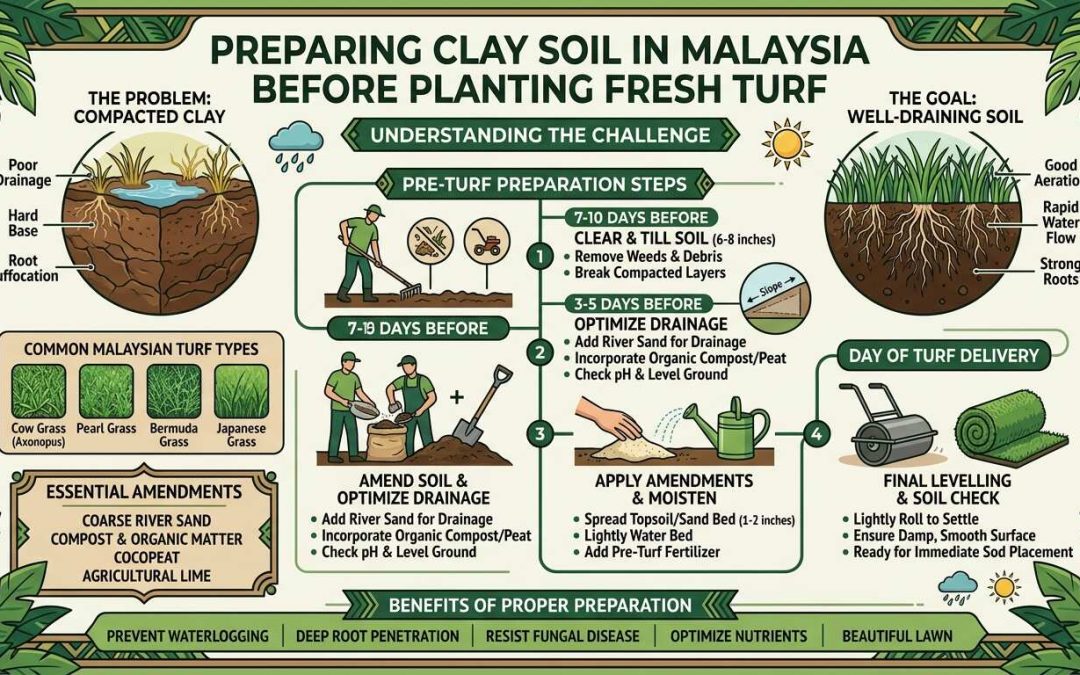
Malaysia’s tropical climate and abundant sunshine create an ideal environment for lush, year-round lawns using varieties like Cow Grass, Pearl Grass, or Bermuda grass. However, heavy clay soil—common in newly cleared construction zones and housing developments across Malaysia—presents a major hurdle for successful landscaping.
Although mineral-rich, dense clay soil suffers from severe compaction, poor drainage, and root suffocation during heavy monsoon downpours. Laying fresh sod on unconditioned clay causes grass to yellow, develop root rot, or become overrun by aggressive weeds.
Thorough ground preparation is critical before turf installation. Treating, aerating, and conditioning dense clay creates a fertile, well-draining soil foundation, enabling turf grass to establish deep roots, endure torrential rains, and survive dry spells.
What Is Clay Soil and Why Is It Challenging for Lawns?
Clay soil is composed of fine mineral particles that pack tightly together with minimal space between them. When dry, clay becomes hard and baked like brick; when wet, it transforms into a sticky, heavy mass that retains excess water.
When evaluating soil condition prior to turfing, specialists examine key attributes:
- Soil Compaction
- Water Permeability
- Soil Aeration
- Organic Matter Content
- Surface Leveling
- pH Balance.
The primary objective of clay soil preparation is to break up dense earth, introduce organic matter, and optimize drainage so grass roots can thrive.
Why Soil Preparation Is Crucial Before Turf Installation
Laying fresh grass directly over unprepared, compacted clay is one of the most common mistakes in Malaysian landscaping. Simply rolling or laying sod over raw clay often leads to patchy growth and quick lawn decay.
Thorough soil preparation helps property owners:
- Prevent water pooling and surface flooding during tropical downpours.
- Encourage rapid, deep root penetration for newly laid sods.
- Avoid root rot and fungal infections caused by trapped moisture.
- Improve nutrient absorption and fertilizer effectiveness.
- Create a smooth, level lawn surface free of bumps and dips.
- Reduce long-term lawn maintenance and replanting costs.
Investing effort into soil prep ensures your new turf establishes strong roots within weeks rather than struggling for months.
Identifying Common Clay Soil Problems in Malaysian Gardens
Unprepared clay soil exhibits distinct warning signs that can severely hamper fresh grass growth if unaddressed.
Common issues include:
- Waterlogging
- Soil Cracking
- Extreme Hardness
- Foul Soil Odor
- Poor Earthworm Activity
- Weed Dominance
Addressing these conditions before turf installation lays the foundation for a vibrant, resilient lawn.
Protecting Your Lawn Investment with Proper Drainage
In Malaysia’s tropical climate, torrential afternoon thunderstorms are frequent. Dense clay soil naturally repels water absorption once saturated, leading to standing pools that suffocate grass roots.
Without adequate drainage preparation, waterlogged clay leads to:
- Saturated, oxygen-starved turf roots.
- Die-off of delicate sod lines and yellowing foliage.
- Proliferation of moss, algae, and fungal diseases.
- Soil erosion and washing away of topsoil layers.
- Uneven settling of ground levels beneath the turf.
Proper ground conditioning creates micro-channels within the clay, enabling excess water to filter down safely away from the surface root zone.
Enhancing Turf Health with Soil Amendments
Modifying clay soil is not just about drainage; it is also about delivering nutrients and structural breathability to the roots.
Landscapers frequently recommend soil amendments such as:
- Coarse Sand (River Sand)
- Compost and Organic Peat
- Cocopeat
- Topsoil Blends
- Agricultural Lime
Enriching the ground with these materials transforms sticky clay into friable, nutrient-rich soil that supports vigorous grass growth.
Step-by-Step Clay Soil Preparation Process
Conditioning heavy clay soil requires a structured approach before any turf grass is delivered to the site.
Standard preparation steps include:
- Removing existing weeds, debris, rocks, and stripping away the top 2 – 3 inches of dead vegetation.
- Rotovating or tilling the compacted clay layer to a depth of at least 6-8inches.
- Spreading and mixing river sand and rich compost thoroughly into the tilled clay layer.
- Smoothing the area and sloping the ground slightly away from building foundations to encourage run-off.
- Spreading a thin layer (1-2inches) of washed sand or high-grade topsoil mix as a smooth bedding plane for turf sods.
- Lightly rolling the ground with a garden roller to settle loose pockets without re-compacting the clay.
Following this systematic approach ensures that new turf sods establish rapid root contact with the ground.
Impact of Tropical Storms on Freshly Prepared Soil
Heavy monsoonal rains can disrupt site preparation if timing is ignored. Unprotected, loose clay during a severe storm can quickly wash away or turn into an unworkable muddy slop.
Heavy rains during prep work can cause:
- Topsoil and sand amendment washouts.
- Re-compaction of freshly tilled clay layers.
- Mud accumulation that impedes smooth turf laying.
- Uneven erosion channels across graded slopes.
Planning soil preparation during clear weather windows—or laying protective tarps over worked ground prior to laying turf—prevents costly rework.
Commercial and Large-Scale Property Preparation
Large commercial sites, property developments, public parks, and sports fields present unique clay soil challenges due to heavy machinery compaction during construction.
Large-scale projects require:
- Sub-surface Drainage Systems
- Heavy Machinery Tilling
- Bulk Sand Topdressing
- Laser Grading
Professional site preparation protects commercial property managers from expensive turf replacements and water retention issues down the line.
When Should Soil Preparation Be Started?
Ground preparation should be timed carefully relative to turf delivery and weather conditions.
Key timing guidelines:
7 to 10 Days Before Turf Delivery
Begin clearing, tilling, and incorporating sand and compost.
3 to 5 Days Before
Complete final grading, leveling, and drainage check.
1 to 2 Days Before
Apply pre-turf starter fertilizer and lightly moisten the bed.
Day of Turf Delivery
Ensure the bed is damp, smooth, and ready for immediate sod placement.
Turf sods are perishable; prepping the soil completely before grass arrives prevents sods from drying out on pallets.
Common Mistakes to Avoid When Preparing Malaysian Clay Soil
Even well-meaning homeowners can make critical errors during soil preparation that lead to long-term turf failure. Avoiding these common traps saves time, money, and effort:
- Adding Pure Sand Without Organic Matter
- Over-Compacting the Base
- Ignoring Micro-Slopes and Swales
- Laying Turf on Dry, Sun-Baked Substrate
Essential Soil Tests and Quick Inspections Before Planting
Before bringing in materials, performing a few simple diagnostic tests helps you determine the exact condition of your ground:
- Take a moist clump of garden soil and squeeze it in your palm. If it forms a tight, slick ball that doesn’t crumble easily when poked, your site contains heavy clay requiring higher proportions of organic compost.
- Fill a clear mason jar with soil and water, shake thoroughly, and let it settle for 24 hours. The heavy clay particles will settle in the top layer, giving you a clear visual ratio of sand, silt, and clay.
- Dig an 8-inch hole, fill it with water, and monitor how fast it drains. If water remains standing after 4 to 6 hours, subsurface drainage channels or deep aeration are mandatory.
- Test soil acidity using cheap digital meters or paper strips mixed with distilled water; a reading below 5.5 confirms the need for dolomite lime application.
Seasonal Timing Guidelines for Lawn Preparation in Malaysia
Timing your soil preparation around Malaysia’s tropical weather patterns makes a massive difference in how fast fresh grass establishes:
Pre-Monsoon Preparation Window
The best time to break up, till, and amend clay soil is during the transition period right before heavy seasonal rains begin, allowing you to establish smooth drainage slopes without fighting muddy conditions.
Avoiding Peak Heavy Monsoon Weeks
Installing turf during severe storm periods can wash away freshly tilled topsoil, displace lime treatments, and erode unrooted sod sheets.
Managing Dry Spell Soil Work
During dry spells, hard-packed clay becomes extremely tough to cultivate; deep watering the area 24 hours prior to tilling makes breaking up hardpan soil significantly easier.
Post-Planting Establishment Care
Plan your project so that the initial 2-week rooting period falls during light, consistent rain cycles to reduce artificial watering demands while avoiding flood conditions.
Conclusion
Preparing clay soil in Malaysia before planting fresh turf is an essential investment in the life, health, and beauty of your lawn. By addressing clay compaction, enhancing internal drainage, and mixing in vital organic amendments, you create an ideal environment where fresh grass sods can thrive despite harsh tropical weather.
Whether for a residential home, commercial facility, or public landscape, thorough ground preparation guarantees that your new lawn stays vibrant, resilient, and puddle-free for years to come.
FAQs
1. Can I lay fresh turf directly over raw clay soil?
It is strongly discouraged. Laying turf sod directly onto raw, unconditioned clay restricts root growth, traps water near the surface, and usually results in yellowing grass, root rot, or lawn failure during heavy rains.
2. How deep should I condition clay soil before laying grass?
You should till and condition clay soil to a depth of at least 6to8inches (15to20cm). Mix coarse river sand and organic compost into this depth, then top with 1to2inches of quality topsoil or sand bed.
3. What is the best amendment for breaking up clay soil in Malaysia?
A combination of coarse river sand and organic compost or cocopeat works best. River sand creates physical drainage pathways between clay particles, while organic matter improves soil structure, aeration, and microbial activity.
4. How long after soil preparation should I plant fresh turf?
Fresh turf should ideally be laid immediately or within 24to48hours after final soil bed preparation. Having the soil prepped beforehand ensures sods can be installed as soon as they are delivered.
5. What type of grass grows best on prepared clay soil in Malaysia?
Once clay soil is properly amended with sand and organic matter and graded for drainage, popular Malaysian turf varieties such as Cow Grass (Axonopus compressus), Pearl Grass, Japanese Grass, and Bermuda grass will thrive.