
Pruning fruit trees is a fundamental practice for maintaining healthy, productive orchards and home gardens. Unlike temperate regions with distinct winter dormancies, tropical environments present year-round growth conditions, high humidity, and distinct wet and dry seasons. Because tropical fruit trees do not undergo traditional winter dormancy, knowing when and how to trim them requires a different approach.
Improper timing can lead to reduced fruit yields, increased vulnerability to pests, or excessive vegetative growth at the expense of fruit production. Understanding seasonal cycles, weather patterns, and specific fruit tree species is essential for successful pruning in a tropical setting.
This comprehensive guide breaks down the best timing, methods, and benefits of pruning fruit trees in tropical regions to ensure maximum harvests and long-term tree health.
What Is Tropical Fruit Tree Pruning?
Tropical fruit tree pruning is the selective removal of specific plant parts—such as branches, shoots, deadwood, and buds—tailored to the continuous growth cycles of tropical fruit species.
Unlike temperate pruning, which largely occurs during cold-weather dormancy, tropical pruning works in harmony with monsoon seasons, flush cycles, and post-harvest periods.
During a professional tropical pruning session, specialists focus on:
- Overall canopy height and size management
- Removal of dead, diseased, or insect-infested branches
- Thinning out dense growth to increase sun penetration
- Air circulation improvements inside the inner canopy
- Elimination of water sprouts and root suckers
- Structural shaping for heavy crop loads
The primary goal is to direct the tree’s energy toward high-quality fruit production while keeping the canopy manageable and resilient.
Why Timing Matters for Tropical Fruit Tree Pruning
In tropical climates, growth cycles are driven primarily by moisture availability and light rather than severe temperature changes. Pruning at the wrong stage of the growth cycle can trigger unnecessary leafy flushes, cut off upcoming flower buds, or expose fresh cuts to severe fungal infections during rainstorms.
Proper timing allows fruit growers to:
- Stimulate fruit-bearing wood development
- Synchronize flowering and fruit sets
- Prevent disease outbreaks caused by excessive wetness
- Control tree height for easier harvesting
- Maximize sunlight penetration for sugar development in fruit
Timing your pruning correctly ensures your trees spend energy on producing fruit rather than over-recovering from aggressive trimming.
Identifying the Ideal Pruning Seasons in Tropics
Determining the best time to prune tropical fruit trees involves matching your pruning activity to the dry and wet seasons.
Key seasonal timing guidelines include:
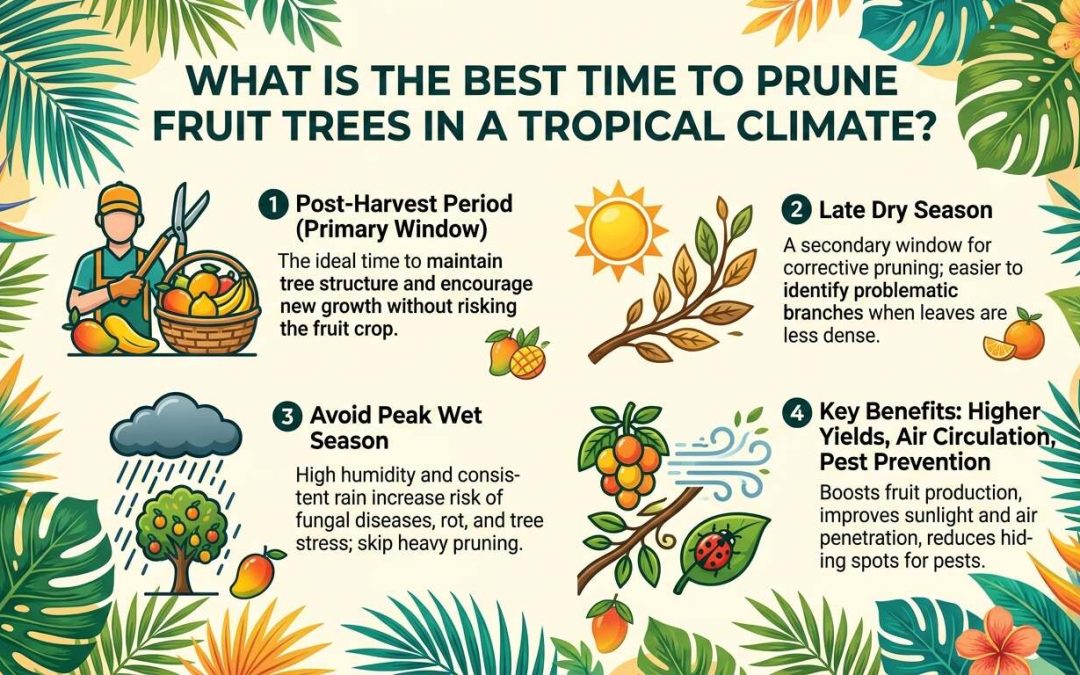
Post-Harvest Period (The Primary Window)
The absolute best time to prune most tropical fruit trees (such as mango, avocado, rambutan, and durian) is immediately after the annual harvest. This gives the tree time to produce new, mature shoots before the next flower initiation phase.
Late Dry Season / Early Wet Season
Pruning just before the arrival of regular rains encourages strong, healthy new flushes without exposing open wounds to constant downpours.
Avoid Peak Wet Season
Cutting major branches during heavy monsoon rains increases the risk of fungal infections and rot in open pruning wounds due to prolonged high humidity.
Pre-Flowering Caution
Avoid structural pruning right before or during flowering, as this can destroy flower panicles and dramatically cut fruit yields for the season.
Pruning Requirements for Common Tropical Fruit Trees
Different tropical fruit species react differently to pruning and follow distinct seasonal timelines.
Common tropical fruit tree requirements:
Mango Trees
Prune heavily right after harvest. Remove central leader branches to keep the tree short (below 3–4 meters) and open the middle canopy to full sunlight.
Citrus Trees (Lime, Lemon, Pomelo)
Lightly prune throughout the dry season to remove deadwood and suckers. Heavy pruning is best done right after the main harvest.
Avocado Trees
Trim right after harvest to maintain height and remove low-hanging branches. Avoid heavy canopy removal during hot, scorching dry spells to prevent trunk sunburn.
Guava and Papaya
Guava benefits from light pruning after every fruiting cycle to encourage continuous fruit-bearing shoots. For papaya, focus on removing lower yellowing leaves and dead stems.
Durian and Jackfruit
Perform sanitary pruning to clear out inner water shoots and weak branches post-harvest to allow clear space for large fruits to attach safely.
Essential Health Benefits of Pruned Fruit Trees
Pruning tropical fruit trees offers benefits far beyond size control. It directly impacts the physiological strength and productivity of the tree.
Key health benefits include:
- Thinning the inner canopy reduces localized humidity, drastically lowering the risk of fungal diseases like powdery mildew, anthracnose, and leaf spots.
- Sunlight exposure encourages inner flowering and accelerates fruit ripening and sugar accumulation.
- Removing dense tangles deprives pests such as scale insects, mealybugs, and whiteflies of humid hiding spots.
- Structurally sound trees are less likely to split under the physical weight of heavy fruit loads.
The Importance of Proper Pruning Techniques
Combining good timing with clean execution guarantees rapid healing and strong growth.
Essential pruning practices include:
- Always use sharp secateurs, loppers, or saws to make smooth cuts without tearing the bark.
- Sterilize cutting blades with alcohol or bleach solution between trees to prevent spreading pathogens across your garden or orchard.
- Cut at a 45-degree angle just above an outward-facing bud or branch collar so water drains away from the wound naturally.
- Leave the branch collar intact so the tree can naturally seal its own wound.
Why Storm Prep Pruning Is Vital in the Tropics
Tropical climates frequently experience severe weather, including heavy tropical storms, squalls, and monsoons. Overgrown or top-heavy fruit trees are highly vulnerable to storm damage.
Storm-prep pruning helps prevent:
- Snapped main scaffold limbs under strong winds
- Entire trees uprooting due to heavy wind resistance in dense canopies
- Loss of an entire season’s fruit crop from structural collapse
- Structural damage to nearby garden fences, roofs, or utilities
Light canopy thinning prior to the storm season allows high winds to pass through the tree safely without causing destructive limb failure.
Commercial Orchard Management vs. Home Gardens
Fruit tree pruning goals vary depending on whether you manage a commercial enterprise or residential garden space.
Commercial Fruit Growers
Focus heavily on height restriction for efficient hand-picking, uniform fruit size, spray penetration, and mechanized orchard management.
Homeowners & Backyard Gardeners
Prioritize keeping trees manageable within property boundaries, maintaining visual appeal, preventing structural risks near houses, and enjoying steady, multi-variety fruit yields.
Both settings benefit greatly from establishing a regular, scheduled pruning routine tailored to local weather patterns.
When to Call Professional Tropical Tree Care Services
While basic tip-pruning and sucker removal can be done by homeowners, larger maintenance tasks require professional skills and tools.
Consider hiring professional services when:
- Fruit trees have grown too tall to safely prune from the ground
- Large structural limbs need removal near buildings or power lines
- Trees show advanced signs of disease, stem rot, or heavy infestation
- You require orchard-scale rejuvenation pruning for mature, non-producing trees
- Specialized pruning equipment or aerial work is needed for high canopies
Professional tree care services ensure heavy cuts are made safely and correctly without endangering your property or damaging long-term tree health.
Long-Term Advantages of Scheduled Fruit Tree Pruning
Establishing an ongoing annual pruning schedule provides long-term performance benefits for your tropical fruit garden:
- Maximum Fruit Yields & Quality
- Controlled Tree Height
- Extended Tree Lifespan
- Better Pest & Disease Resistance
- Improved Property Aesthetics
- Reduced Storm Hazards
How to Choose a Tropical Tree Pruning Provider
If you decide to seek expert help for your tropical fruit trees, choose a qualified tree service company that offers:
- Experienced tree specialists familiar with tropical horticulture and fruit tree biology
- Proper sanitation and disease prevention protocols
- Professional pruning equipment and safety gear
- Comprehensive maintenance, trimming, and safe branch removal services
- Safe, insured work practices around homes and utility structures
Working with knowledgeable local arborists protects your investment and keeps your orchard productive for years to come.
Conclusion
Finding the best time to prune fruit trees in a tropical climate comes down to observing your local weather patterns and tree species growth flushes. By focusing heavy pruning immediately after the harvest season and maintaining light sanitation trims before severe weather, you create optimal conditions for robust flowering and bountiful harvests.
Whether caring for a few backyard fruit trees or managing a large property, consistent timing, proper technique, and occasional professional assistance will keep your tropical fruit trees healthy, manageable, and productive year after year.
FAQs
1. What is the single best month to prune fruit trees in a tropical climate?
There is no single universal month because tropical fruit trees do not follow a winter calendar. Instead, the best time is immediately after your tree finishes fruiting (post-harvest), which usually coincides with the dry season or the transition period right before the wet season starts.
2. Can I prune fruit trees during the rainy season in the tropics?
It is generally best to avoid heavy pruning during the peak rainy season. High humidity and continuous moisture make open cuts highly vulnerable to fungal infections and rot. Limit wet-season cuts to removing broken or dangerous storm-damaged branches.
3. What happens if I prune my tropical fruit tree while it is flowering?
Pruning during the flowering phase removes flower panicles, stresses the tree, and triggers vegetative leaf growth instead of fruit set. This will significantly reduce or completely eliminate your fruit yield for that season.
4. How low should I trim my tropical fruit trees?
For home gardens and commercial orchards, keeping fruit trees pruned to a manageable height of 2.5 to 4 meters (8 to 12 feet) is ideal. This permits easy fruit harvesting, easy pest inspection, and simple canopy maintenance without specialized climbing gear.
5. Should I apply wound paint or sealant to pruning cuts on tropical fruit trees?
In most cases, wound paint is not recommended. Tropical fruit trees heal rapidly on their own when cuts are made clean and flush with the branch collar during dry weather. Applying heavy sealants can trap moisture underneath, potentially promoting decay and fungal growth.