
Transforming a residential garden into a lush, green lawn is a goal for many homeowners in Malaysia. However, maintaining real natural grass in tropical heat, heavy seasonal rain, and shade can be an ongoing challenge.
Synthetic turf has emerged as a low-maintenance, year-round alternative that keeps outdoor spaces looking fresh and vibrant without constant mowing or watering.
Choosing the right synthetic turf material requires careful consideration. Malaysia’s unique climate—characterized by intense UV radiation, high humidity, and sudden downpours—demands specific product features to ensure longevity and comfort. Selecting the wrong material can lead to faded colors, trapped heat, poor drainage, or rapid wear.
Understanding the key materials, technical specifications, and installation considerations helps property owners select the ideal synthetic grass solution for their homes.
What Is Synthetic Turf Material Made Of?
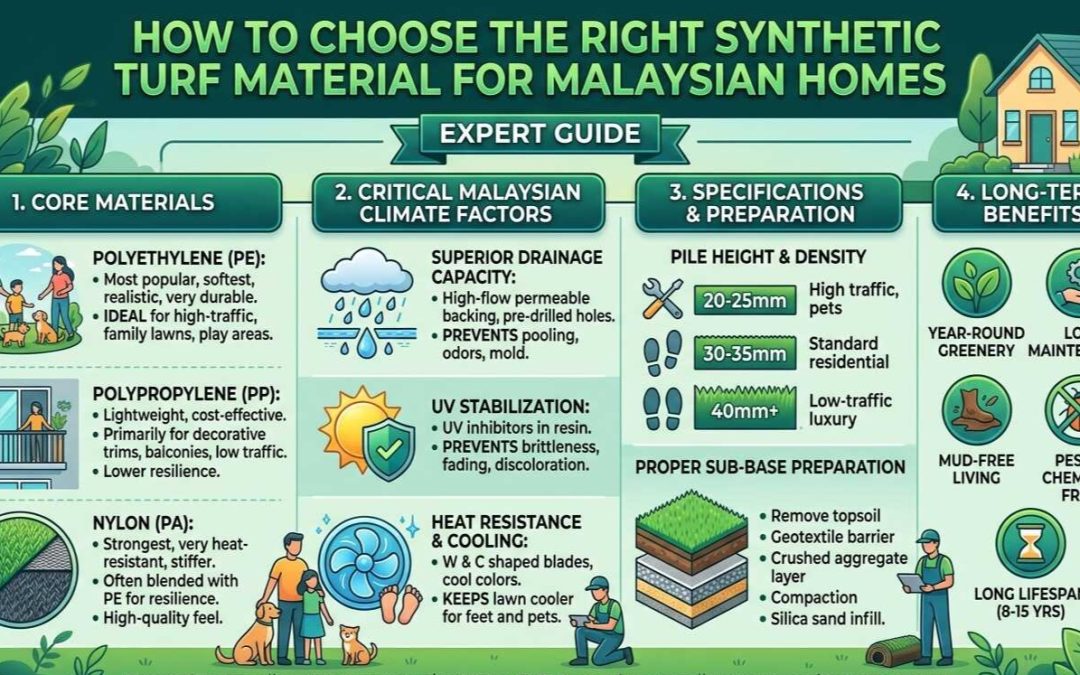
Synthetic turf is manufactured using polymer fibers designed to mimic the appearance and flexibility of natural grass blades. The three main materials used in residential artificial grass each offer distinct characteristics:
Polyethylene (PE)
- The most popular choice for home lawns.
- Soft, realistic, durable, and comfortable underfoot.
- Ideal for high-traffic family yards and play areas.
Polypropylene (PP)
- A lightweight and cost-effective material option.
- Primarily used for indoor areas, decorative trims, or low-foot-traffic balcony spaces.
- Features a lower melting point and less resilience to heavy everyday use.
Nylon (PA)
- The strongest and most heat-resistant synthetic fiber available.
- Stiffer and more expensive than other synthetic options.
- Frequently blended with polyethylene to give tall grass blades greater bounce-back resilience.
The backing material, typically made of polyurethane (PU) or latex, holds these fibers together and plays a critical role in overall durability and weather resistance.
Key Factors for the Malaysian Climate
When evaluating synthetic turf material for Malaysian properties, specific environmental factors must take priority to ensure a long-lasting installation.
Superior Drainage Capacity
- Essential for handling Malaysia’s frequent and heavy tropical rainfall.
- Requires high-flow permeable backing with pre-drilled drainage holes or a fully porous backing layer.
- Prevents water from collecting on top of the lawn, eliminating slipping hazards, unpleasant odors, and mold growth.
UV Stabilization
- Protects plastic fibers from degrading quickly under intense tropical sunlight.
- Utilizes UV inhibitors integrated directly into the resin during production.
- Prevents grass blades from turning brittle, fading, or discoloring after long-term sun exposure.
Heat Resistance & Cooling Features
- Addresses the tendency of synthetic grass to absorb more heat than natural lawns.
- Incorporates light-reflecting blade shapes (such as W-shaped or C-shaped blades) to deflect sunlight.
- Uses light-colored infill materials to reduce overall surface temperatures.
Comparing Synthetic Turf Pile Heights & Density
The look, feel, and performance of synthetic turf depend heavily on pile height (blade length) and stitch density.
20mm to 25mm Pile Height
- Best for high-traffic zones, pets, and children’s play areas.
- Shorter pile heights are easier to clean and sweep.
- Retains its upright structural shape longer under heavy use.
30mm to 35mm Pile Height
- Represents the ideal sweet spot for standard residential lawns.
- Strikes a balance between soft, realistic luxury and structural resilience.
- Provides a lush appearance without sacrificing durability.
40mm+ Pile Height
- Delivers a plush, thick, manicured look suitable for decorative front gardens.
- Designed primarily for areas with minimal foot traffic.
- Requires regular brushing and maintenance to prevent longer blades from flattening.
Density (the number of stitches per square meter) is equally important. Higher-density turf feels firmer and looks fuller, while low-density grass can look thin and reveal the backing material beneath.
Synthetic Turf vs. Natural Grass Planting Services
Many homeowners weigh artificial turf against professional natural grass planting services. Each option offers unique advantages depending on your lifestyle and property needs.
Synthetic Turf
- Requires occasional sweeping or rinsing to remove leaf litter and dirt.
- Maintains a vibrant, green appearance regardless of light or shading from surrounding trees.
- Requires a higher initial investment for materials and installation.
- Eliminates long-term water, fertilizer, and routine garden maintenance expenses.
Natural Grass
- Demands continuous regular mowing, watering, fertilizing, weeding, and lawn treatment.
- Requires consistent sunlight to thrive and often struggles to grow in shaded yards under dense tree canopies.
- Features lower initial installation and planting costs.
- Higher ongoing long-term maintenance and care expenses.
Proper Sub-Base Preparation Matters
Even the highest quality synthetic turf material will fail if installed on a poorly prepared base. Professional installation involves:
- Removing topsoil and organic growth to prevent future shifting or weed growth.
- Installing a crushed aggregate/gravel base layer for effective sub-surface drainage.
- Compacting the sub-base to create a firm, level foundation.
- Laying a geotextile weed barrier to block weed growth through drainage holes.
- Applying silica sand infill to weigh down the turf and keep grass blades standing upright.
Proper sub-base construction prevents sagging, water pooling, and premature surface wear.
Why Professional Installation Is Recommended
While DIY kits are available, professional installation ensures correct alignment, seamless joint joining, and proper drainage layout. Experienced installers understand:
- Soil conditions and gradient planning for tropical heavy rains.
- Seamless seam-binding techniques to prevent visible join lines.
- Proper edging and perimeter securing to prevent turf lifting.
- Correct infill spreading for maximum cushion and blade support.
5 Long-Term Benefits of Quality Synthetic Turf
Investing in high-grade synthetic turf provides several lasting advantages for homeowners:
- Year-Round Greenery
- Low Maintenance
- Mud-Free Living
- Pest & Chemical Free
- Long Lifespan
Choosing a Professional Turf & Grass Service Provider
When selecting a contractor for your lawn transformation, look for companies that provide:
- High-quality UV-stabilized materials suited for tropical climates.
- Experienced installation teams with sub-base preparation expertise.
- Comprehensive services, including both natural grass planting and synthetic turf installation.
- Clear warranties covering color fading and material durability.
- Transparent pricing and professional property consultations.
Working with qualified professionals ensures your new lawn stays durable, attractive, and safe for years to come.
Conclusion
Choosing the right synthetic turf material for Malaysian homes comes down to balancing UV resistance, proper drainage design, pile height, and density. By opting for high-quality polyethylene or nylon blends installed over a crushed aggregate sub-base, homeowners can enjoy a mud-free, green outdoor space year-round.
Whether upgrading a shaded residential garden, balcony, or commercial property landscape, selecting the correct material and pairing it with expert installation ensures a long-lasting, visually appealing investment.
FAQs
1. Is synthetic turf suitable for Malaysia’s heavy rainy season?
Yes, provided it features a permeable backing with adequate drainage holes and is installed on a well-compacted crushed aggregate sub-base. This setup allows heavy rainfall to drain through efficiently without pooling on the surface.
2. How hot does synthetic grass get in Malaysian weather?
Synthetic grass absorbs more heat than natural grass under direct sunlight. Choosing UV-stabilized fibers with cooling blade shapes (such as C or W shapes) and light sand infill helps reduce surface heat. Briefly rinsing the grass with water instantly cools the surface on hot days.
3. Is synthetic turf safe for pets and children?
Yes, high-grade synthetic turf is non-toxic, lead-free, and soft underfoot. It creates a clean, mud-free play area that eliminates exposure to lawn pesticides and soil-dwelling pests like fleas and ticks.
4. How long does residential synthetic turf last in Malaysia?
With proper installation and basic maintenance (such as clearing leaf litter and periodic brushing), quality synthetic grass lasts between 8 to 15 years in tropical conditions.
5. How do I maintain synthetic turf?
Maintenance is minimal. Use a soft broom or leaf blower to clear organic debris, rinse occasionally with water to remove dust or pet messes, and brush against the grain periodically to keep the fibers standing upright.